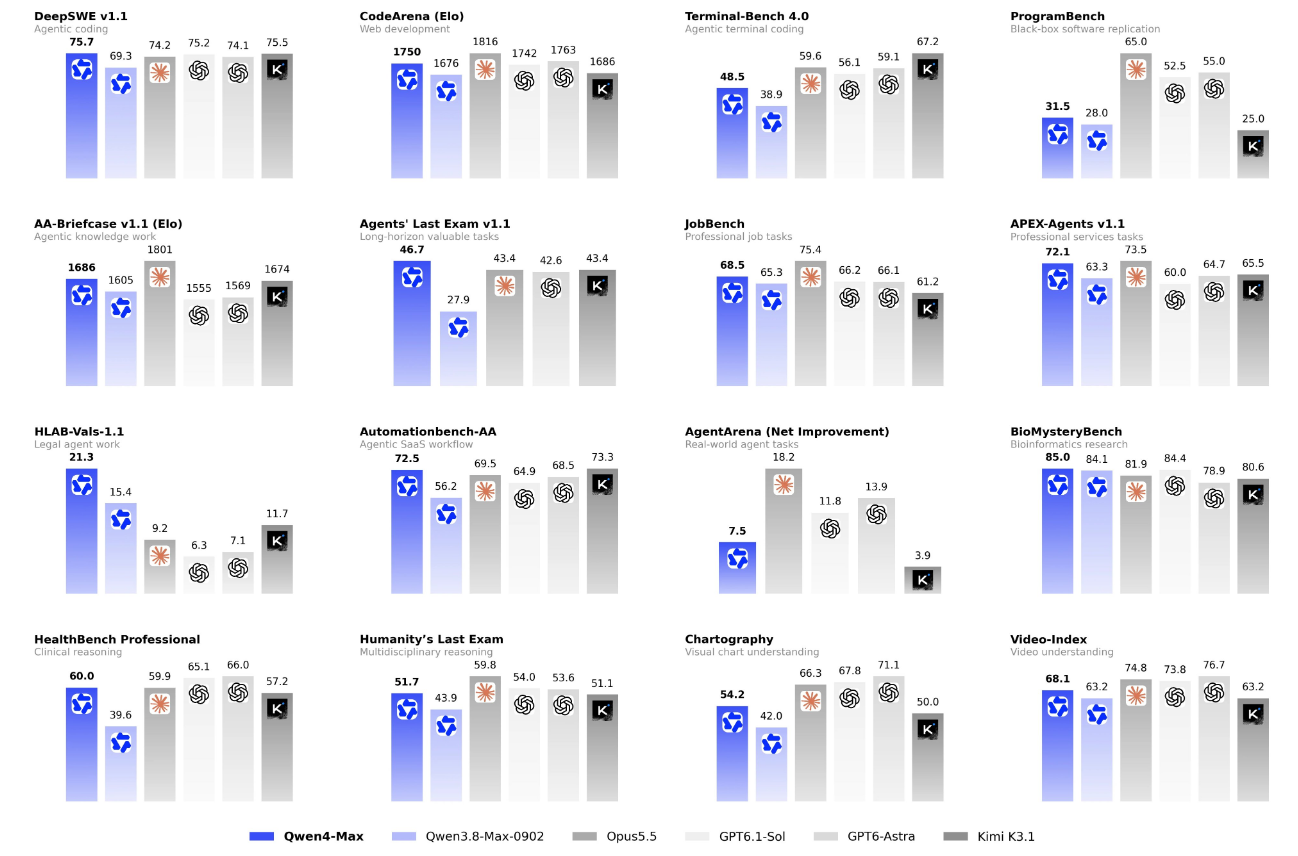
Here is the honest headline before any table: nobody has published a shared benchmark scoreboard for Qwen4-Max and Gemini 4 Argon. Alibaba’s launch table scores Qwen4-Max against Qwen3.8-Max-0902, Opus 5.5, GPT-6.1 Sol, GPT-6 Astra and Kimi K3.1. Google does not publish Argon scores against Qwen. Any article that shows you a clean Qwen4-Max versus Gemini 4 Argon winner table is inventing it. So this post does the boring, useful thing instead: it lines up the verified facts each vendor publishes, the rates you actually pay on our gateway, the modality map, and a routing guide you can apply today.
The verdict up front. If your workload sends audio or video as input, Argon is the only one of the two you can use today, because Qwen4-Max’s published GA input modalities are text and image. If your workload is text and image with long agentic chains, legal or life-science text, Qwen4-Max owns the published evidence on its launch rows, but it is not on our gateway yet, so the rate you would pay is still unknown. On price today, Argon through us at $0.525 input and $2.625 output per million is the cheapest 1M-context multimodal route we sell, full stop. On max output, the preview-era figure for Qwen4-Max is far higher. Neither model is the better model in the abstract. They are different tools with different receipts.
What the two models are
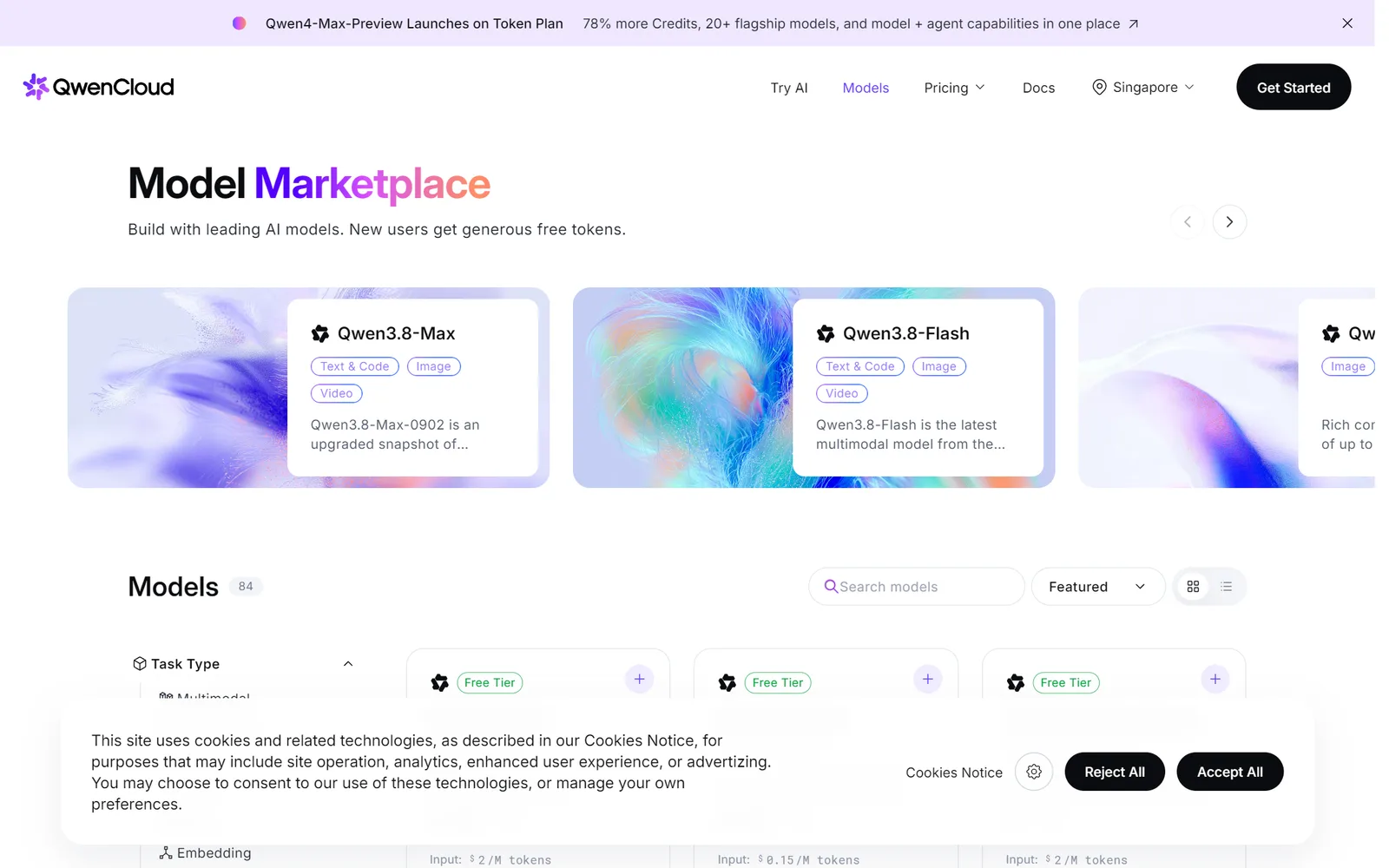
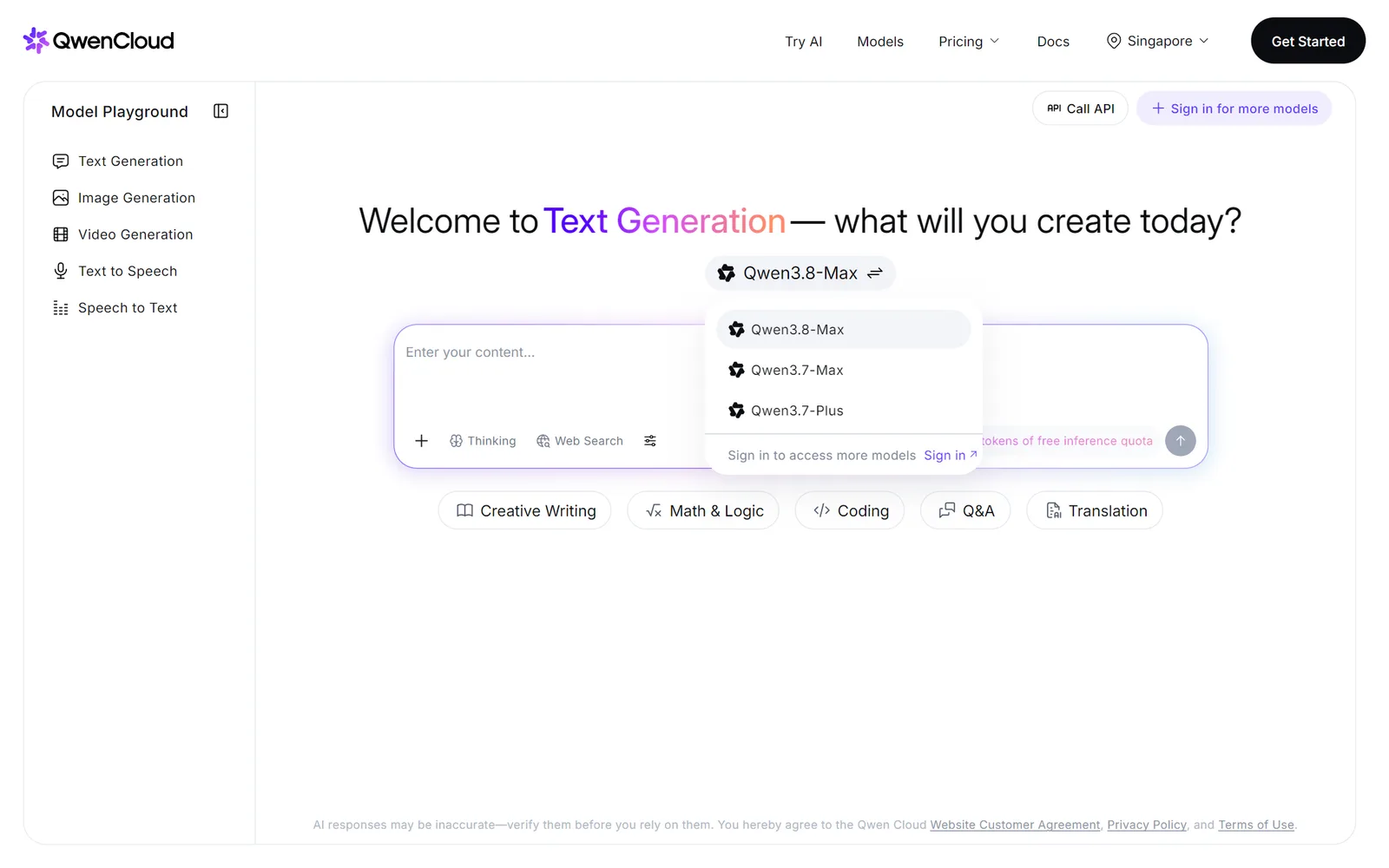
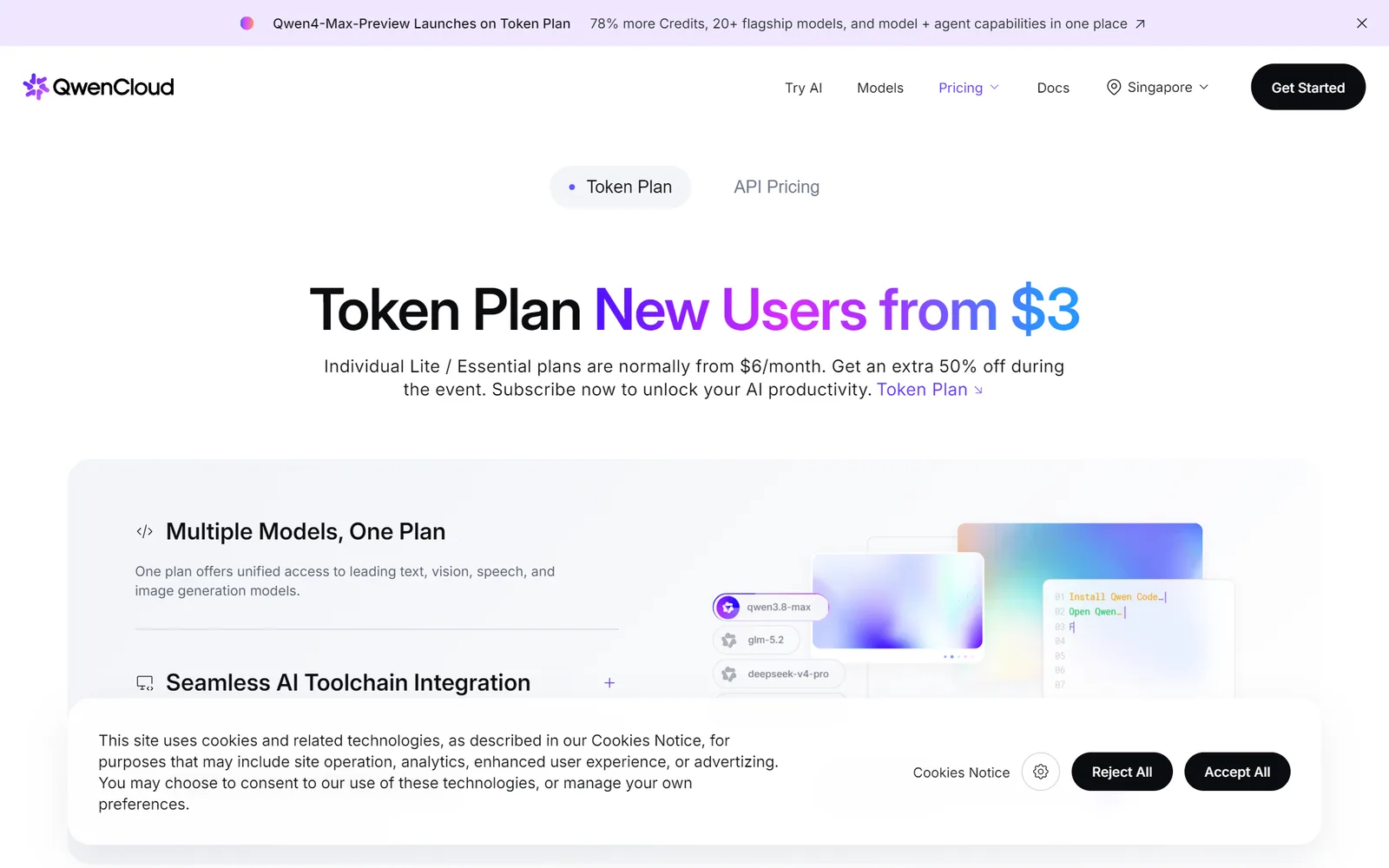
Qwen4-Max is Alibaba’s mixture-of-experts flagship, live on Qwen Cloud since 2026-11-16: 1,000,000-token context, native vision, text and image input, $1.50 input, $4.50 output and $0.075 implicit caching per million at list, plus a Token Plan from $3 to $43 a month. It is also inside Qwen Studio, QwenWork and Qoder.
Gemini 4 Argon is Google’s flagship reasoning model on our board: 1,000,000-token context, text, image, audio and video input, 64,000 max output, vendor list $2 input and $10 output per million, sold through our gateway at $0.525 / $2.625 with cached input at $0.10, in the featured tier since 2026-10-18.
| Spec | Qwen4-Max | Gemini 4 Argon |
|---|---|---|
| Vendor | Alibaba (Qwen) | |
| Context window | 1,000,000 | 1,000,000 |
| Input modalities | Text, image | Text, image, audio, video |
| Output | Text | Text |
| Max output tokens | 393,216 on the preview, per eesel.ai’s review | 64,000 |
| List input $/M | $1.50 | $2.00 |
| List output $/M | $4.50 | $10.00 |
| Cached input $/M | $0.075 implicit | $0.10 list |
| On One AI API Key | Queued | Live $0.525 / $2.625 |
| Protocols | OpenAI-compatible on Qwen Cloud | OpenAI on our gateway |
Read the modality row twice, because it is the whole fork in the road. Qwen’s launch material says native vision with text and image input. Argon’s spec says audio and video input too. A transcripted-audio pipeline or a video-understanding service can ship on Argon today; on Qwen4-Max it cannot, on the published evidence.
The benchmark problem, stated plainly
Our sixteen-benchmark explainer transcribed every row Alibaba published. Gemini 4 Argon appears in none of them. Google’s own material publishes Argon capabilities, but we did not find a vendor-published head-to-head against Qwen4-Max, and we will not invent one. Artificial Analysis and LMArena have no public Qwen4-Max rows as of 2026-11-16, so there is no neutral third scoreboard to fall back on either. BenchLM documents the Qwen4-Max evidence gap directly: specifications, pricing, context, and no source-displayable benchmark rows beyond Alibaba’s own table.
What you can compare today is not quality, it is the decision inputs you control: modalities, context, output ceiling, price, caching and availability. Those are exactly the rows most teams weight when they pick a route, and they are the rows this post prices out.
The modality map
Image input. Both take images. Qwen4-Max calls its vision native, and its launch table includes Chartography and Video-Index rows, where it scores 54.2 and 68.1. Argon takes images too, and Google publishes its own vision benchmarks, which we have not transcribed here because no shared suite puts the two side by side. Run your own chart and screenshot probe before you commit: paste the same five charts to both routes and grade the outputs yourself.
Audio input. Argon takes audio. Qwen4-Max’s published GA modalities do not include audio input. Voice pipelines route to Argon, or to StepAudio 3 Chat Preview for free-lane experiments, and wait for Qwen to publish audio input if it ever does.
Video input. Argon takes video. Qwen4-Max’s GA table does not list video input. Note the trap: Alibaba’s launch table includes a Video-Index benchmark row for Qwen4-Max, which measures video understanding, but the published input modalities are text and image. How the suite fed video is not published, so do not read that row as a video-input promise. Our vision and video benchmarks post separates the two carefully.
File input. Neither publishes file input on these rows: Argon takes text, image, audio and video; Qwen4-Max takes text and image. If you send PDFs as files today, GPT-6 Astra is the flagship on our board that publishes file input.
Text only. Both handle long text. Both sit at 1M context. Argon’s max output is 64,000; Qwen4-Max’s preview-era figure is 393,216 tokens shared between thinking and answer, per eesel.ai’s review, which is a different generation of the model and must be re-verified at GA. If your job is long-form generation, that ceiling gap is worth testing on your own prompts.
The pricing math
List rates per million tokens:
| Route | Input $/M | Output $/M | Cached input $/M |
|---|---|---|---|
| Qwen4-Max, Qwen Cloud list | $1.50 | $4.50 | $0.075 implicit |
| Gemini 4 Argon, Google list | $2.00 | $10.00 | $0.10 |
| Gemini 4 Argon, One AI API Key | $0.525 | $2.625 | $0.10 |
| Qwen4-Max, One AI API Key | Queued, not live yet |
Qwen4-Max list is 75% of Argon’s list input and 45% of its list output. But our gateway already sells Argon below Qwen4-Max’s list on both lines, which is the number most launch-day comparisons miss: the cheapest published rate is not the rate you pay, it is the rate your gateway charges. When Qwen4-Max joins our model catalog it gets the same treatment, and until then Qwen3.8 Max at $0.577 / $1.73 is the cheapest 1M-context flagship we sell, with text, image and video input.
A concrete task, one year, fifty agent runs a day at 8,000 input and 2,000 output each. Monthly volume is about 12.4M input and 3.1M output tokens.
| Route | Monthly cost, this workload |
|---|---|
| Qwen4-Max, Qwen Cloud list | $32.55 |
| Gemini 4 Argon, Google list | $55.80 |
| Gemini 4 Argon, One AI API Key | $14.65 |
| Qwen4-Max, One AI API Key | Queued, unknown |
Caching tilts it further for agents that re-send the same system prompt and repo context all day. At 80% cache hit on input, Argon through us costs about $10.43 a month on this workload, and Qwen4-Max list costs about $18.41 with its $0.075 implicit cache. Argon’s cached rate through us is $0.10 per million, the same number kingy.ai records for Sol cache reads via OpenRouter in their Qwen4-Max versus GPT-6.1 Sol run. Read our prompt caching guide before you trust any total that ignores the cache row, and our Qwen4-Max caching math post for the full break-even table.
Need a 1M-context multimodal route today? Gemini 4 Argon is live at $0.525 / $2.625 with audio and video input, and Qwen4-Max is queued for the same metered treatment.
How to call each model today
Qwen4-Max is live on Qwen Cloud, OpenAI-compatible:
curl https://ap-southeast-1.maas.qwencloudapi.com/compatible-mode/v1/chat/completions \
  -H "Authorization: Bearer $QWEN_API_KEY" \
  -H "Content-Type: application/json" \
  -d '{
    "model": "qwen4-max",
    "messages": [{"role": "user", "content": "Read this screenshot and list the defects."}]
  }'
Gemini 4 Argon is live on our gateway with your existing key:
curl https://api.oneaiapikey.com/v1/chat/completions \
-H "Authorization: Bearer $ONEAI_API_KEY" \
-H "Content-Type: application/json" \
-d '{
  "model": "gemini-4-argon",
  "messages": [{"role": "user", "content": "Transcribe and summarize this audio clip."}]
}'
Copy the Qwen base URL from your own console rather than trusting any blog’s host, including this one; regional hosts have varied before. A 401 means the key or entitlement is wrong, a 404 on the model usually means the id, and qwen4-max is not qwen4-max-preview. Enable streaming so long reasoning arrives token by token, set max_tokens deliberately because a reasoning model can spend its output budget thinking first, which our reasoning docs cover, and check rate limits before you scale either route. The quickstart covers auth and the first call, and the API reference covers the fields both endpoints share.
What Artificial Analysis, LMArena and the community are saying
The third-party picture is thin and honest about it. Neither Artificial Analysis nor LMArena publishes a Qwen4-Max row as of 2026-11-16, and neither publishes a Gemini 4 Argon versus Qwen4-Max pairing. The only independent measurement of Qwen4-Max we have seen is kingy.ai’s Sol head-to-head via OpenRouter, which is not Argon but does give you the shape of the model’s first week: Vals Index v2.2 at 63.20%, a wrong-figure rate of 6.4% across 125 questions, and first-attempt durations of 15.67 minutes against Sol’s 6.29, all from a single synthetic repetition with unblinded AI grading. MindStudio’s hands-on piece is qualitative: animation generation, 82-language naming, satellite image reasoning and visual safety judgment. The Pandaily thread on X leads with the Agents’ Last Exam score of 46.7 and the caching price cut. On the Argon side, Google’s own docs are the primary source, and our rankings page tracks real gateway throughput for every model we serve, which is the speed column no launch table gives you.
Mistakes to avoid
- Inventing a winner table. No shared benchmark suite scores these two. Anyone showing you one is guessing.
- Reading Video-Index as video input. It is a video-understanding score; Qwen4-Max’s published GA input modalities are text and image.
- Comparing list to gateway. Argon through us is $0.525 / $2.625, not its $2 / $10 list. Compare the rate you actually pay.
- Ignoring the output ceiling. 64,000 max output on Argon against a preview-era 393,216 on Qwen4-Max matters for long generation jobs.
- Assuming the cache price is the cache price. Qwen4-Max caches implicitly at $0.075; Argon bills $0.10 cached through us. Different mechanics, read both guides.
- Pinning a moving id. Preview ids and GA ids behave differently; the 3.8 generation proved it. Pin, log, re-run evals, as our API key per project guide argues.
FAQ
Is Qwen4-Max better than Gemini 4 Argon?
Nobody has published a shared comparison, so the honest answer is: unknown. Qwen4-Max leads the agentic, legal and bioinformatics rows of Alibaba’s table against five other models; Argon’s vendor material does not score those suites. Pick by modality and price today, and by your own evals when both are metered on one gateway.
Which one costs less?
At list, Qwen4-Max: $1.50 / $4.50 against Argon’s $2 / $10. On our gateway, Argon is live at $0.525 / $2.625, and Qwen4-Max is queued, so the only rate you can pay today is Argon’s. Run your own volumes through the cost calculator.
Which one takes audio and video input?
Gemini 4 Argon, on the published spec. Qwen4-Max’s GA material lists text and image input. If audio or video input is a hard requirement, Argon is the route today, and our vision guide covers image input on the gateway.
Which one has the longer output?
On the published figures, Qwen4-Max’s preview build allowed 393,216 max output tokens shared between thinking and answer, per eesel.ai’s review. Argon lists 64,000. Treat the Qwen figure as preview-era until Alibaba restates it for GA.
Is either model on One AI API Key today?
Argon is live and metered. Qwen4-Max is queued for the catalog at a published rate below list, the same as every Alibaba flagship. Qwen3.8 Max is live today at $0.577 / $1.73, and qwen3.8-max-0902-uncensored:free runs on the free lane.
Where do I track this until Qwen4-Max lands here?
The changelog carries every catalog change, the model status checker shows live availability, and the free models page lists the zero-rate lanes while you wait.
The bottom line
Qwen4-Max versus Gemini 4 Argon is not a contest with a scoreboard, it is a fork in the road. Audio and video input, the lowest gateway price per token among 1M-context multimodal models, and a live metered route today: that is Argon. Published agentic, legal and bioinformatics wins, a lower list price, implicit caching at $0.075 and a much higher preview-era output ceiling: that is Qwen4-Max, queued here and live upstream. Match the modality and the rows to your workload, run your own probe on the two or three tasks that decide your use case, and meter the result. Argon is live today; Qwen4-Max will switch on with an id change, not a migration.
Keep reading: all sixteen benchmarks explained, Qwen4-Max vs GPT-6 Astra, Qwen4-Max vs GPT-6.1 Sol, Qwen4-Max vs Claude Opus 5.5, Qwen4-Max vs Kimi K3, Qwen4-Max vs Grok 4.7, Qwen4-Max prompt caching guide, Qwen4-Max API quickstart, Qwen4-Max 1M context guide, and the cheapest way to run Qwen4-Max, including free lanes.
The modality line, stated plainly
Gemini 4 Argon accepts text, image, audio and video input. Qwen4-Max at GA accepts text and image. If your workload is audio transcription, voice or video understanding, Argon is the only one of the two that can ingest it today, and no benchmark table changes that. Both list a 1M-token context window; Qwen4-Max’s output ceiling is 393,216 tokens shared between thinking and answer, Argon’s is 64,000, which is the sharper difference for long-generation work.
The same discipline applies to the vision question. Both models accept images; neither has a shared, published vision suite against the other, so the scoreboard is your own. Pick twelve images from your production pipeline, run them through Argon today with the same prompt you would send to qwen4-max, and log the fields that decide cost: input tokens, output tokens, time to first token and the cache split. When the Qwen4-Max row goes live on the catalogue, rerun the identical twelve and diff the logs. A benchmark you did not run is a rumour. A benchmark you ran twice on the same images is a decision.
More Qwen4-Max coverage
The Fable comparison, added 2026-11-16:
-
Qwen4-Max vs Claude Fable 5.1: the real price gap, output ceilings and when Fable earns its rate
-
Qwen4-Max benchmarks explained: 16 tests against Opus 5.5, GPT-6.1 Sol, GPT-6 Astra and Kimi K3.1
-
Qwen4-Max vs GPT-6 Astra: sixteen benchmarks and the price gap
-
Qwen4-Max vs Claude Opus 5.5: sixteen benchmarks and the honest split
-
Qwen4-Max vs Qwen3.8-Max-0902: the generational jump, row by row
-
Qwen4-Max vs Kimi K3: harness differences and the honest numbers
-
Qwen4-Max API pricing: list rates, the $43 Token Plan and the cost math
-
Qwen4-Max prompt caching guide: the $0.075 implicit cache math
-
Qwen4-Max 1M context guide: recall probes and the full-window bill
-
Qwen4-Max coding agents setup: Claude Code, Cursor, Codex and Qoder
-
Qwen4-Max vision and video benchmarks: what native vision actually wins
-
Qwen4-Max API quickstart: ids, base URLs, streaming and max_tokens
-
Qwen4-Max preview speed test: what we measured before launch