Direct answer
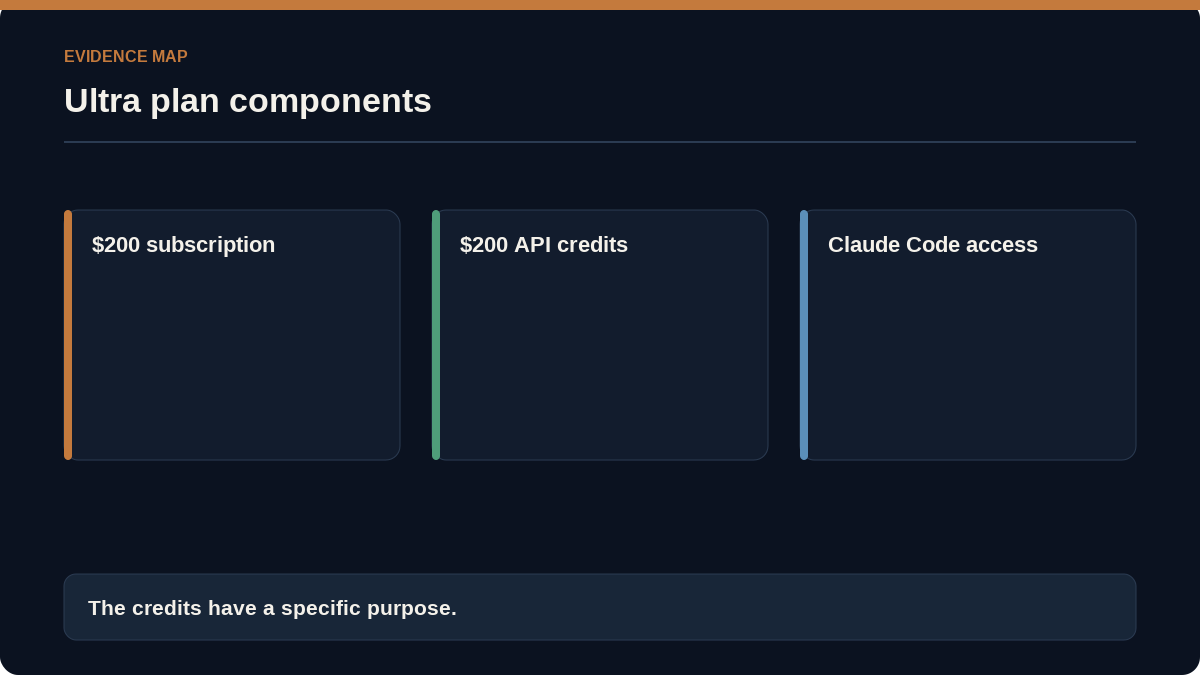
Claude Ultra costs $200 per month and includes $200 in monthly API credits. Those credits do not pay for interactive Claude Code usage credits. They apply when you run claude -p or use the Agent SDK with an API key from the linked Console organization.
Interactive Claude Code usage credits are billed at standard API rates. Anthropic also provides a monthly spending cap, usage alerts and auto-reload controls. The practical rule is to track the subscription, the monthly API-credit balance and the Claude Code usage-credit balance as three separate lines.
Why two balances cause budget mistakes
The word “credit” appears in two different billing contexts. That makes it easy to assume the $200 included with Ultra is a general wallet that pays for every Claude-related charge. The official documentation draws a narrower boundary.
Monthly API credits cover qualifying API use through the documented route. Interactive Claude Code sessions use a separate usage-credit mechanism. A developer who watches only the included API-credit balance can miss interactive usage accumulating elsewhere.
The mistake matters because the amounts can look identical. Ultra includes $200 in monthly API credits, and the subscription itself costs $200 per month. Two equal numbers describe different things. One is the price of the plan. The other is a limited benefit with eligible uses.
A clean budget starts by naming the route for each charge. API request, headless Claude Code run, Agent SDK call and interactive Claude Code session should not share one vague line. The Ultra API credit rules are the primary source for the split.
Ultra plan price and access
Ultra costs $200 per month. Official: Claude Code is included in the plan, but inclusion does not mean unlimited usage.
Verified Ultra accounts do not have the standard five-hour cap. A weekly limit still applies. The Claude Ultra five-hour exception explains that distinction. Ultra is not a way to remove every quota boundary.
The plan also sits above Pro and Max on price. Pro starts at $20 per month or $200 annually, and Max costs $100 per month. The Claude Code free-tier entry price compares those entry choices. Ultra should be bought for a workload that uses its specific benefits, not because the credit amount looks like a discount that cancels the subscription fee.
That last point is important. The $200 in monthly API credits does not make Ultra free. You still pay $200 for the plan. Whether the credits are valuable depends on whether your qualifying API usage would otherwise cost you money.
The Claude Code rate limits remain relevant even when the billing picture is clear. A budget can be accurate while the workflow still stops at a weekly reset. Price and access are separate planning problems.
Monthly API credits: what they cover
The Ultra plan includes $200 in monthly API credits. Official: the credits apply when you run claude -p or use the Agent SDK with an API key from the linked Console organization.
The phrase “linked Console organization” is part of the rule. A key from an unrelated organization should not be assumed to draw from the Ultra benefit. The billing route matters as much as the plan name.
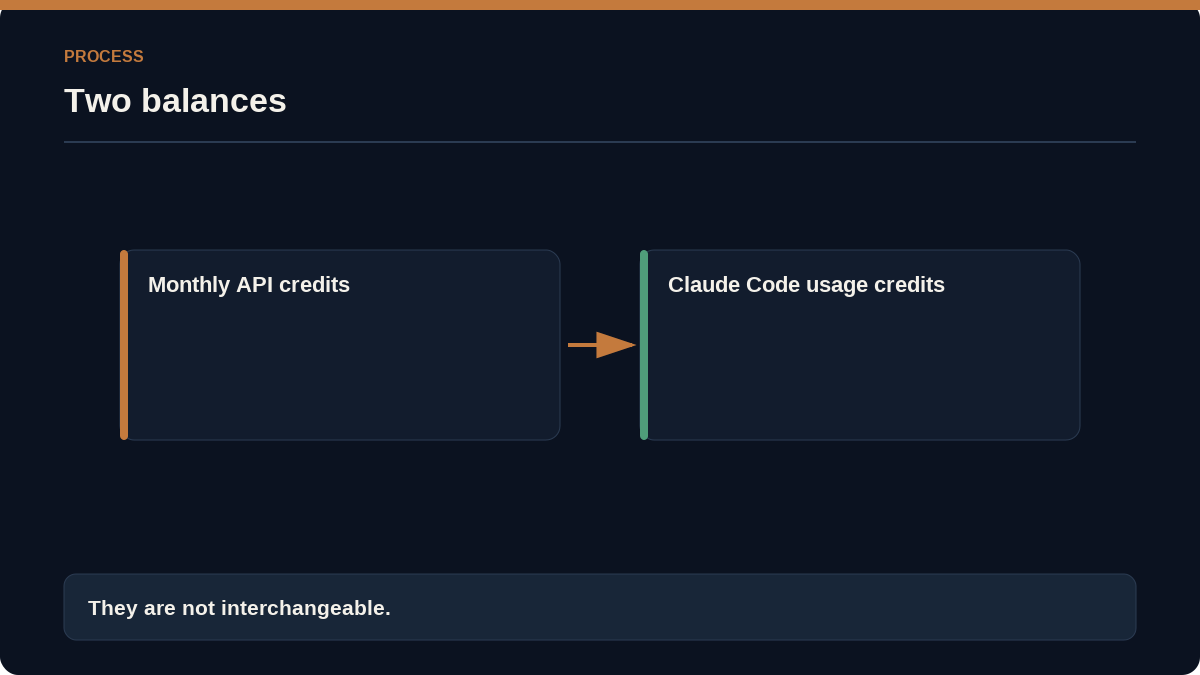
Monthly API credits do not cover interactive Claude Code sessions. That exclusion is the central fact of this article. It prevents the included balance from being treated as a universal Claude Code allowance.
Credit types
| Credit or charge | What it is | Eligible route | What it is not |
|---|---|---|---|
| Ultra subscription | $200 monthly plan price | Access to Ultra and included benefits | Not a usage balance |
| Monthly API credits | $200 included with Ultra | claude -p or Agent SDK with a linked Console API key |
Not interactive Claude Code usage |
| Interactive Claude Code usage credits | Separate usage-credit balance | Interactive Claude Code sessions | Not paid from the monthly API-credit benefit |
| Standard API bill | Per-token API charge | Qualifying API requests | Not a subscription quota |
The Claude Code costs documentation also publishes vendor estimates for enterprise usage. Those estimates are not an individual Ultra subscriber’s bill. Keep vendor averages, plan benefits and your own usage in separate columns.
For a developer who mostly uses interactive Claude Code, the included API credits may have limited direct value. For a developer who also runs headless jobs or Agent SDK workloads through the linked organization, the credits may offset part of that API spend. The benefit depends on the route you actually use.
Interactive Claude Code usage credits
Interactive Claude Code usage credits are billed at standard API rates. Official: Anthropic documents usage credits as a separate mechanism from the monthly API-credit benefit.
This means an interactive session can create a usage-credit charge even while the included monthly API-credit balance remains untouched. The amount depends on the model and token usage under the applicable API rates. The frozen fact pack does not provide one fixed monthly overage for every Ultra user.
A useful mental model is to ask which route produced the request. If it was an interactive Claude Code session, look at the Claude Code usage-credit side. If it was claude -p or an Agent SDK call with the linked Console key, check whether the monthly API-credit benefit applies.
The distinction becomes more important when you automate work. A script that calls claude -p may follow a different billing route from the same task started interactively. Do not assume that changing the launch method is only a convenience. It can change which balance pays.
The Claude Code custom API base URL guide explains another route variable: where requests are sent and which credential pays. A custom endpoint can move the workload to API billing. Keep that configuration in the budget review.
Billing routes
| Route | Billing treatment in the frozen facts | Budget line |
|---|---|---|
| Interactive Claude Code session | Usage credits at standard API rates | Claude Code usage credits |
claude -p with linked Console API key |
Monthly API credits can apply | Included API credits |
| Agent SDK with linked Console API key | Monthly API credits can apply | Included API credits |
| Custom API base URL | Depends on the configured provider and terms | Separate API-provider budget |
The custom-route row is intentionally conditional. A gateway or direct API provider can have its own prices and terms. The coding-agent API key compatibility guide explains why client format and endpoint choice need verification before production use.
Spending caps, alerts and auto-reload
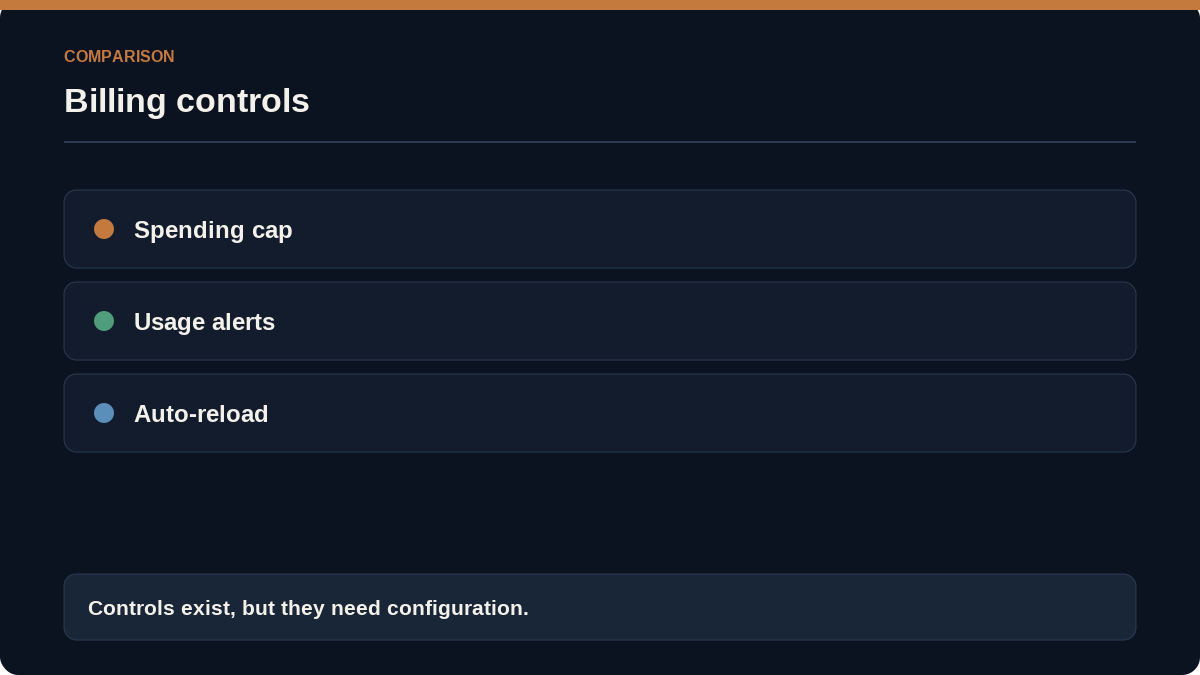
Anthropic documents a monthly spending cap, usage alerts and auto-reload for usage credits. Official: these controls exist. It would be inaccurate to say Claude Code has no spending controls.
The controls still need configuration. A cap that sits above your intended budget does not protect the budget. An alert that arrives after a large run may be too late to prevent the charge. Auto-reload can keep work moving, but it can also add spend unless its limits fit the plan.
A practical setup names an owner for the billing settings. That person reviews the cap, alert thresholds and auto-reload behavior before a heavy automation period. The per-project API key guide is a useful pattern for separating project spend, even though it describes gateway keys rather than Anthropic’s console.
Keep the cap and the alert threshold distinct. The cap is a boundary. The alert is an early signal. A team that treats them as the same control may discover the boundary only after the work has stopped.
Worked budget example
The following example is Derived from the official Ultra price and credit amount. It uses a hypothetical $120 API charge so the arithmetic stays separate from any claim about your actual usage.
Assume an eligible API workload produces a $120 standard API charge in a month. The $200 monthly API-credit benefit would leave $200 - $120 = $80, assuming the charge qualifies and no other eligible API usage has consumed the benefit.
Now assume an interactive Claude Code session produces a separate $120 usage-credit charge. That charge does not reduce the $80 API-credit remainder. It belongs to the Claude Code usage-credit balance.
Budget example
| Line | Amount | Which balance pays | Remaining or action |
|---|---|---|---|
| Ultra subscription | $200 | Payment method | Fixed monthly plan cost |
| Included monthly API credits | $200 credit | Eligible API route | Benefit, not cash income |
| Qualifying API usage | $120 charge | Monthly API credits | $80 credit remains |
| Interactive Claude Code usage | $120 charge | Claude Code usage credits | Separate balance is reduced |
| Total cash subscription cost | $200 | Payment method | API credits do not reduce the subscription fee |
The example does not claim that $120 is a typical Ultra bill. It is a round arithmetic input chosen to show the separation. Replace it with your own measured usage.
A second Derived view makes the same point. If qualifying API usage reaches $200, the included monthly API-credit benefit is fully consumed. Further qualifying API usage would need another payment route under the applicable terms. Interactive Claude Code usage remains a separate question throughout.
The Claude Fable 5.2 pricing math shows how quickly API charges can grow when an agent loop repeats context. The arithmetic is useful for estimating a qualifying API workload, but it does not change which balance applies.
Who benefits from Ultra
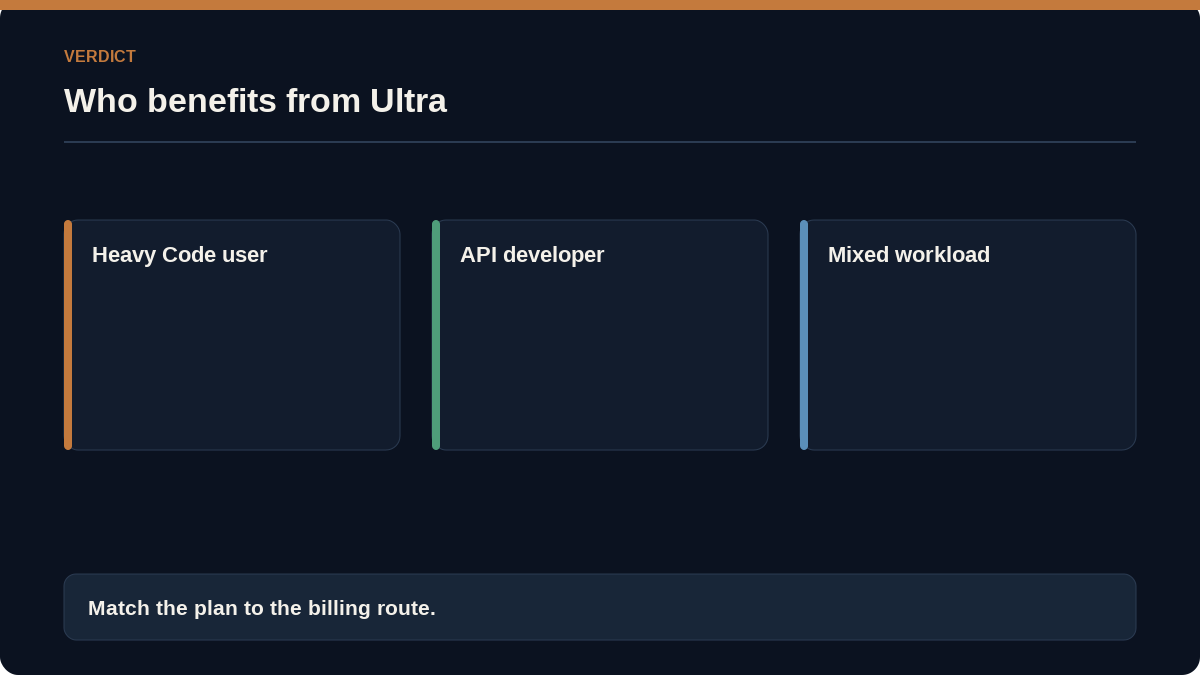
The Ultra plan is the clearest fit for a developer or team with both heavy interactive Claude Code use and qualifying API work through the linked Console organization. The plan’s value comes from using both sides of the billing design.
An API-first developer may care more about the monthly credits than the interactive exception. A Claude Code-first developer may care more about long sessions and the verified Ultra five-hour exception. A mixed workload can benefit from both, but only if the routes are tracked correctly.
The Claude Code cost per verified change model is the final check. A $200 plan should be judged by accepted work after review and rework, not by the size of the included credit line.
The Ultra plan is a weaker buy when you do not use the qualifying API route, when your main constraint is the weekly cap, or when the subscription materially exceeds the value of the work you accept. The Claude Code lock-in and exit costs guide helps expose dependence that a plan comparison can miss.
Reconcile the three lines every month
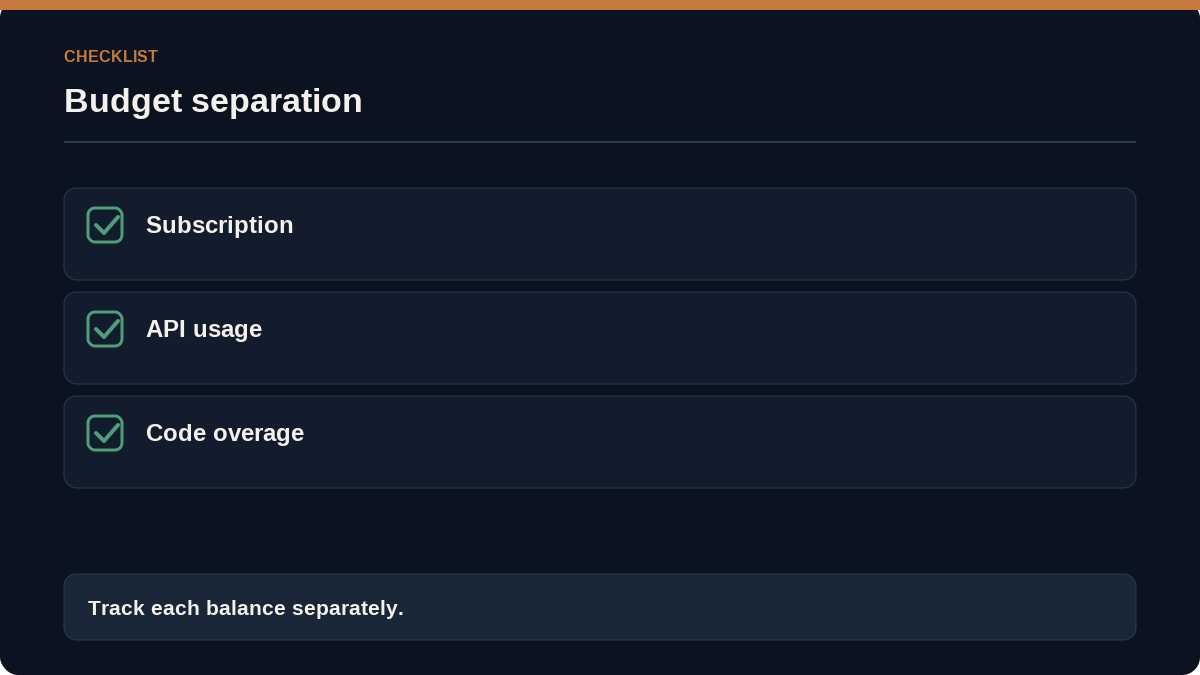
A monthly review should start with the subscription receipt, then move to the monthly API-credit balance, then finish with interactive Claude Code usage credits. Keeping that order prevents the included benefit from being mistaken for cash or for a universal allowance.
First, confirm the plan and price. The Ultra plan is $200 per month in the frozen record. If the receipt shows a different amount, treat that as a new fact to verify rather than adjusting the article’s arithmetic from memory.
Second, record qualifying API usage and the remaining monthly API-credit benefit. Note which route produced the usage: claude -p, Agent SDK or another API client with the linked Console key. A request that does not follow the documented route should not be assumed to consume the included benefit.
Third, record interactive Claude Code usage-credit charges separately. This is the line most likely to be missed if you watch only the included API-credit balance. The amount depends on actual token usage and the applicable standard API rates.
The monthly LLM API cost worksheet provides a structure for the API side. The Claude Code cost per verified change model adds the human side: review time, rework and accepted changes. Use both views. A balanced ledger can still describe work that was not worth doing.
Finally, compare the month with your intent. If the qualifying API route went unused, the included credits did not provide the value you expected. If interactive usage dominated, the plan decision should reflect that workload. The review should end with a specific action: keep Ultra, change the workflow, adjust controls or test another plan.
Automation changes the billing route
The same task can follow different billing paths depending on how it is launched. An interactive session, a headless claude -p run and an Agent SDK call should not be treated as interchangeable for budget purposes.
Official: monthly API credits apply to claude -p or the Agent SDK when the request uses an API key from the linked Console organization. Claude Code sessions in interactive mode use separate usage credits. The result is that an automation project can move spend from one balance to another simply by changing the execution method.
Before automating a repeated task, estimate its shape. The Fable 5.2 agent-loop math shows how repeated context and tool output can increase token use. The Claude Code agent-team token overhead guide adds a specific vendor warning: teams can use about seven times more tokens when teammates run in plan mode.
Neither number is a promise about your automation. Both are reasons to run a small measured sample before scheduling a large job. Record input tokens, output tokens, retries and the accepted result. Then multiply by the expected run count.
A scheduled job also needs a stop condition. A spending cap, usage alert and auto-reload setting should be reviewed before the first unattended run. The controls exist, but their values determine whether they protect the budget. The per-project API key guide offers a useful separation pattern for evaluation traffic.
The honest loss is operational. Automation can reduce repetitive human work while increasing the speed at which a misconfigured loop spends money. The answer is not to avoid automation. It is to make the billing route and the limit visible before the loop starts.
When Ultra is the wrong buy
The Ultra plan is the wrong buy when the workload does not use its distinguishing benefits. A developer who rarely runs qualifying API requests may place little value on the monthly API credits. A developer whose main problem is the weekly cap may not gain enough from the five-hour exception.
The $200 price also needs context. Pro starts at $20 per month or $200 annually, and Max costs $100 per month. The Claude Code free-tier entry price compares those options. The Ultra plan should not be selected merely because its included credit amount matches its subscription price.
A developer who mostly needs short, intermittent coding sessions may find a lower plan sufficient. A developer who needs model choice more than long sessions may prefer to test an OpenAI-format route. The multi-model OpenAI-agent setup provides a separate architecture without claiming to replace Claude Code’s interface.
The Ultra plan is also a weak fit when review time dominates. If generated changes require extensive rewriting, a higher plan or a larger credit balance does not fix the acceptance problem. The Claude Code proof-of-work packet helps identify whether the task was actually completed.
The Claude Code single points of failure guide adds another test. If one account or provider can stop the workflow, a more expensive plan does not remove that concentration. A backup route may be worth more than an upgrade for that failure mode.
None of this makes Ultra a poor plan. It makes the buying condition specific. Pay for the route and limits you use, then measure the accepted work that results.
Configure controls before a heavy week
Billing controls work best when they are set before the workload arrives. A cap chosen during an incident is usually a reaction. A cap chosen from a monthly budget is a design decision.
Start with the amount you are willing to spend on interactive Claude Code usage credits. Set the monthly spending cap to match that decision. Then place the usage alert below the cap so there is time to inspect the run before the boundary is reached. The exact values depend on your budget; the frozen fact pack does not publish a universal default.
Review auto-reload separately. It can keep a long job moving, but it can also add spend after the original balance is gone. If the job is time-sensitive, decide whether continuity or a hard stop matters more. Write that choice down with the billing settings.
A heavy week also needs a task boundary. The Claude Code agent-team token overhead guide explains why parallel contexts can raise token use. The Fable 5.2 agent-loop math shows how repeated context affects API charges. Use a small measured run before scheduling a larger one.
After the run, reconcile the result. Compare the usage-credit charge with the accepted changes and review time. If the controls fired, record whether they protected the budget or merely interrupted useful work. The distinction helps you adjust the next setting without guessing.
The honest loss is that controls reduce flexibility. A hard cap can stop a valuable task, and an alert can add noise. The goal is not to eliminate spending. It is to make spending visible while there is still time to act.
What a receipt cannot tell you
A receipt proves that a charge occurred. It does not prove that the charge was necessary, that the work was accepted or that the same task will cost the same next month.
A large usage-credit charge can come from long context, verbose output, retries or a difficult task. A small charge can reflect efficient work or an incomplete result. The Claude Code cost per verified change model exists because price alone cannot distinguish those cases.
The receipt also cannot tell you whether the monthly API-credit benefit was the right payment route. This requires the request context: which key, which client and which execution method. Keep that context in the monthly record.
For forecasting, use the cost calculator with measured token shapes rather than a single average. For live operations, check the gateway status when a time-sensitive job depends on an external route. Those tools answer different questions from the Claude receipt, but they belong in the same discipline of verifying the path before trusting the total.
A practical billing test with an OpenAI-agent gateway
If you want to compare billing routes before renewing a Claude plan, One AI API Key has an active OpenAI-format lane. The 46 live free model IDs run through https://api.oneaiapikey.com/v1 with one key. Use an OpenAI-format agent such as OpenCode or Cline and follow the quickstart.
The free lane allows 100 requests and 5,000,000 tokens per day per account, shared across the 46 free IDs. It resets at 05:30 IST, which is 00:00 UTC. Accounts can have up to three API keys, with one request in flight per key on free models. For paid evaluation, the prepaid pricing has no subscription or seat fee, and online checkout was closed at the audit time, so top-ups are handled by email through support.
Do not use those free IDs in Claude Code. They are OpenAI-format only. The documented Claude Code route uses the Anthropic Messages format at https://api.oneaiapikey.com, but all four Claude IDs were unavailable on 2026-11-27: claude-sonnet-5-5, claude-sonnet-5, claude-opus-5-5 and claude-haiku-4-5.
A fair comparison keeps the same task set and records accepted changes, token use and review time. The multi-model OpenAI-agent setup provides the architecture. Use the per-key controls to cap, expire and restrict evaluation keys, and inspect the console usage and billing guide for request-level records.
The loss is real: an OpenAI-format agent is a different workflow, and free models are not Claude models. The OpenAI versus Anthropic API format guide explains why the client cannot be changed by renaming a model. Compare verified outcomes, not the appearance of a lower balance.
Data gaps and future updates
The frozen record does not provide a typical interactive Claude Code overage for Ultra, a universal cap default or a measured API-credit utilization rate. It also does not establish that every model or request qualifies for the monthly API-credit benefit.
Those gaps keep the recommendation conditional. The Ultra plan is a strong fit when the qualifying API route and interactive workload are both real. It is a weaker fit when the included credits are treated as a general-purpose wallet.
This article should be updated if Anthropic changes the credit exclusion, publishes new plan terms or alters the Ultra limit exception. Until then, the durable rule is simple: the $200 monthly API-credit benefit and interactive Claude Code usage credits are separate balances.
FAQ
Does the $200 Ultra API credit pay for interactive Claude Code?
No. The monthly API credits apply to claude -p or the Agent SDK with an API key from the linked Console organization. Claude Code sessions in interactive mode use separate usage credits.
How are interactive Claude Code usage credits billed?
They are billed at standard API rates. The exact amount depends on the model and token usage.
Does Ultra have spending controls?
Yes. Anthropic documents a monthly spending cap, usage alerts and auto-reload. The values still need to be configured for your budget.
Is Ultra unlimited because it has no standard five-hour cap?
No. The exception applies to verified Ultra accounts, and a weekly limit still applies.
Can the 46 free gateway IDs be used in Claude Code?
No. They use the OpenAI format. Claude Code’s documented gateway route uses the Anthropic format, and all four Claude IDs were unavailable on 2026-11-27.